Quantitative Spatial Proteomics Using Multiplexed Ion Beam Imaging
The MIBIscope™ platform enables highly multiplexed spatial proteomics in preserved tissue using metal-tagged antibodies and mass spectrometry-based detection.


The MIBIscope™ platform enables highly multiplexed spatial proteomics in preserved tissue using metal-tagged antibodies and mass spectrometry-based detection.
Used in peer-reviewed studies across oncology, immunology, and spatial biology research.
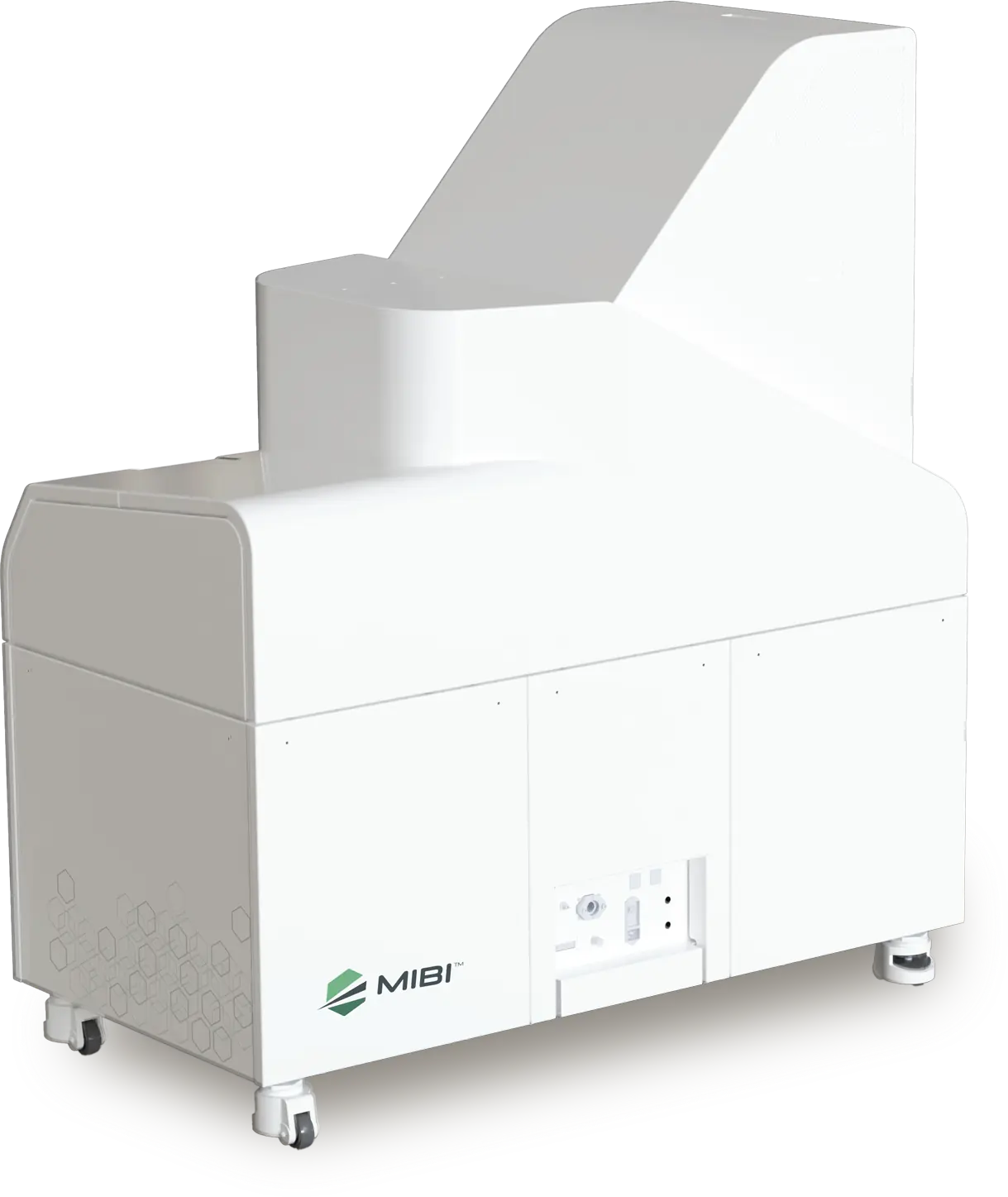
Quantitative spatial proteomics engineered for translational research and discovery.
MIBIscope™ enables Multiplexed Ion Beam Imaging (MIBI), providing highly multiplexed spatial biomarker quantification in preserved tissue using mass spectrometry–based detection.
- Simultaneous measurement of dozens of protein targets using an immunohistochemistry backbone.
- Detection using metal-tagged antibodies eliminates spectral crosstalk common in multiplex fluorescent imaging.
- Designed to integrate into existing laboratory and translational research workflows, with dedicated scientific support.
- Engineered for consistent performance across operators, samples, and instruments.
Demonstrated Scientific Impact at Scale
MIBIscope™ is deployed in high-impact human studies demonstrating reproducible, large-scale spatial proteomics across complex tissue types.
Published in high-impact peer-reviewed journals
Reproducible, high-dimensional imaging in archival human tissue by multiplexed ion beam imaging by time-of-flight (MIBI-TOF)
Laboratory Investigation (2022)

- Multi-day measurement concordance
- Cross-operator reproducibility
- R2= 0.94 across 16 protein targets
Multi-omic landscape of human gliomas from diagnosis to treatment and recurrence
Cancer Cell (2026)

- 670 lesions analyzed
- 310 patients
- 1.2+ million cells profiled
- 52 protein markers per sample
Applications span oncology, immunology, and human tissue atlas studies.
Platform Continuity and Long-Term Support
Ensuring operational continuity and long-term platform stability for the Global MIBIscope™ research community.
As of September 2025, Oregon Physics assumed responsibility for manufacturing, service, and ongoing development of the MIBIscope™ platform.
Oregon Physics has long contributed core engineering expertise to the system, including the design and manufacture of the primary ion source used in every instrument.

Supporting the Global MIBIscope™ Research Community
Service and technical support for existing MIBIscope™ systems
Instrument manufacturing and system production
Ongoing engineering and platform development
Collaboration with leading research institutions
Bring Multiplexed Spatial Proteomics Into Your Workflow
Discuss how MIBIscope™ integrates into your laboratory workflow, review application data, and explore experimental strategies aligned with your research objectives.
Discuss system configuration, collaborations, integration, and service options.
Review assay design, panel development, and spatial analysis strategies.
Join our world-class team of ion and electron optics designers, mechanical engineers and technologists.
Never Miss an Update
Subscribe to our newsletter to get the latest news, tips, and updates delivered straight to your inbox.